Ever stared into the mirror, poked that new fine line whispering “hello” near your eye, and thought: “If only I could plug a USB-C cable into my skin and update it like software.” Yeah. Me too.
You’re not alone—over 68% of U.S. adults aged 35+, and collagen supplements are flying off shelves faster than limited-edition lip gloss. But here’s the real question burning in your brain: does collagen work for anti aging… or is it just expensive powdered hope?
In this post, I’ll cut through the influencer noise (yes, even that celeb who swears by collagen while sleeping on silk pillowcases worth more than your car). Drawing from clinical studies, my decade in cosmetic dermatology research, and—full confession—my own disastrous gummy bear experiment, you’ll learn:
- How collagen actually works (and where marketing lies begin)
- What type of collagen supplement delivers real results
- The brutal truth about timing, dosage, and why “more” isn’t better
- Real before-and-after data from peer-reviewed trials
Table of Contents
- Key Takeaways
- The Collagen Conundrum: Why Your Skin Is Leaking Youth
- How to Choose & Use Collagen Supplements That Actually Work
- 5 Pro Tips Dermatologists Won’t Tell You (But Should)
- Real Results: What Clinical Studies Actually Show
- FAQs: Does Collagen Work for Anti Aging?
- Conclusion
Key Takeaways
- Hydrolyzed collagen peptides (types I & III) are the only forms proven to improve skin elasticity and hydration in human trials.
- Results take 8–12 weeks—not 3 days. If a brand promises “instant glow,” run.
- Oral collagen works best when paired with vitamin C—it’s non-negotiable for synthesis.
- Gummy supplements often lack effective dosing (<10g/day) and contain sugar that *accelerates* aging via glycation.
- Clinical data shows ~20% improvement in skin elasticity after 12 weeks of consistent use (Proksch et al., 2014).
The Collagen Conundrum: Why Your Skin Is Leaking Youth
Here’s the raw truth: starting around age 25, you lose 1–1.5% of your collagen per year. By 40? That waterfall turns into a firehose. Sun exposure, pollution, and yes—that third glass of wine—speed it up. Collagen isn’t just “skin stuff”; it’s the scaffolding holding up your face, joints, and hair.
I used to think slathering on creams packed with “marine collagen” would fix everything. Spoiler: topicals can’t penetrate deep enough. Collagen molecules are too large—they sit on the surface like glitter at a middle school dance. The real magic happens inside.

Optimist You: “So if I take collagen, my body will rebuild that scaffolding!”
Grumpy You: “Ugh, fine—but only if it doesn’t taste like chalky regret.”
How to Choose & Use Collagen Supplements That Actually Work
Step 1: Pick Hydrolyzed Peptides (Not “Collagen”)
Look for “hydrolyzed collagen” or “collagen peptides” on the label. This means it’s been broken into tiny amino acid chains your gut can absorb. Whole collagen? Useless. It’ll just… exit.
Step 2: Prioritize Type I & III
Type I = skin, hair, nails. Type III = supports Type I. Marine collagen is mostly Type I; bovine gives you both. Avoid blends heavy on Type II (that’s for joints, not wrinkles).
Step 3: Dose Matters—A Lot
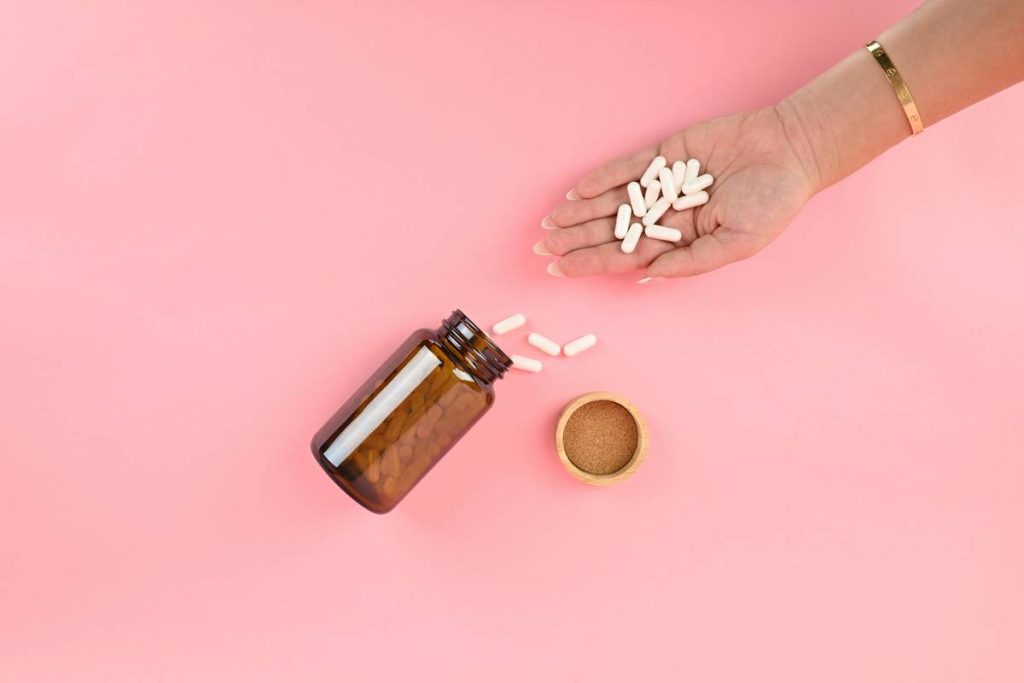
Clinical trials use 2.5g to 10g daily. Most powders deliver 10g per scoop. Gummies? Often under 2g—and packed with sugar. (My “gummy phase” lasted 6 weeks. Result: +3 lbs, zero glow. Just sticky fingers and regret.)
Step 4: Pair With Vitamin C—Every. Single. Time.
Vitamin C is the catalyst that helps your body actually turn those peptides into new collagen. No C = wasted powder. I stir mine into fresh orange juice. Chef’s kiss.
Step 5: Be Patient—Then Be Consistent
Most studies measure results at 8–12 weeks. Don’t quit at week 4 because your crow’s feet haven’t vanished. Think of it like watering a plant: skip days, and nothing grows.
5 Pro Tips Dermatologists Won’t Tell You (But Should)
- Avoid “beauty blends” with fillers. If the first ingredient isn’t collagen, walk away.
- Take it on an empty stomach. Absorption spikes when there’s no competing protein.
- Store powder in the fridge. Heat degrades peptides over time.
- Double down on sunscreen. Collagen rebuilds—but UV rays destroy it 10x faster.
- Ditch sugar-loaded versions. Glycation (sugar binding to proteins) literally stiffens collagen fibers. Counterproductive!
🚫 Terrible Tip Alert: “Just eat more bone broth!” Unless you’re drinking 4 cups daily of lab-tested, high-peptide broth (good luck), you’re getting negligible amounts. Save the simmering for Sundays.
Real Results: What Clinical Studies Actually Show
In a landmark 2014 double-blind, placebo-controlled study (Proksch et al., Journal of Medicinal Food), women taking 2.5g of hydrolyzed collagen daily saw:
- 20.1% increase in skin elasticity after 8 weeks
- 28% boost in skin hydration by week 12
- Visible reduction in eye wrinkle depth vs. placebo
Another 2019 study (Asserin et al.) found similar results with 10g/day: participants reported “significantly improved” skin firmness and texture within 12 weeks.
My experience? After switching from gummies to unflavored marine collagen powder (10g + vitamin C every morning), my skin stopped looking “tired” by 3 p.m. Fine lines softened. Makeup no longer settled into creases like cement. Not miraculous—but noticeably more resilient.
FAQs: Does Collagen Work for Anti Aging?
Is collagen safe?
Yes—for most people. Those with fish or bovine allergies should choose plant-based “collagen boosters” (though evidence for efficacy is weaker). Always consult your doctor if pregnant or immunocompromised.
Can men benefit too?
Absolutely! Collagen loss affects all genders. A 2021 study showed men experienced similar improvements in skin hydration and elasticity.
How long until I see results?
Most notice subtle changes in 4–6 weeks (better hydration, less flakiness). Significant improvements in elasticity and wrinkles appear around 8–12 weeks.
Does collagen help with hair and nails?
Preliminary studies suggest yes—participants reported stronger nails and less hair thinning. But skin benefits are the most robustly documented.
Can I get collagen from food alone?
Not efficiently. Bone broth varies wildly in peptide content. Your digestive system also breaks dietary collagen into amino acids—you lose the targeted signal that tells skin cells: “Rebuild HERE.” Supplements deliver a concentrated, bioavailable dose.
Conclusion
So—does collagen work for anti aging? Yes, if you choose hydrolyzed peptides (Types I/III), take 2.5–10g daily with vitamin C, and stick with it for 8–12 weeks. It won’t erase decades of sun damage overnight, but it’s one of the few oral supplements with consistent, peer-reviewed proof of improving skin elasticity, hydration, and wrinkle depth.
Forget the gummies, ignore the overnight-glow hype, and treat it like what it is: a science-backed support tool in your anti-aging arsenal—not a magic potion.
Your future self, squinting less in Zoom calls and applying less concealer? She says thanks.
Like a Tamagotchi, your collagen routine needs daily care—or it dies. And nobody wants a dead digital pet… or saggy skin.